
Where Plex-Earth stands and where it’s heading
The way engineers design, and the data they design with, is changing faster than ever. Moments like this call for stepping back, thinking together, and deciding where to go next. But sometimes this is hard to do between video calls and deadlines.
So in mid-October, the whole Plex-Earth team closed their laptops, left Athens and drove up to Vourgareli, a village in the Tzoumerka mountains of Greece, for LatLon 2026, our first-ever team retreat.
We went to brainstorm the new era of Plex-Earth, to look at how our teams work with each other and, of course, to spend some proper time together (FYI, rafting was not the only exciting moment of the trip!)
The best part? Everyone was there. Within two hours of the announcement, everyone had signed up, and for a hybrid/remote company, having the whole team in one place is a rare and precious thing.
We came back with new ideas, stronger connections, and a clear picture of where Plex-Earth is heading next. If you want to know more, just keep reading.
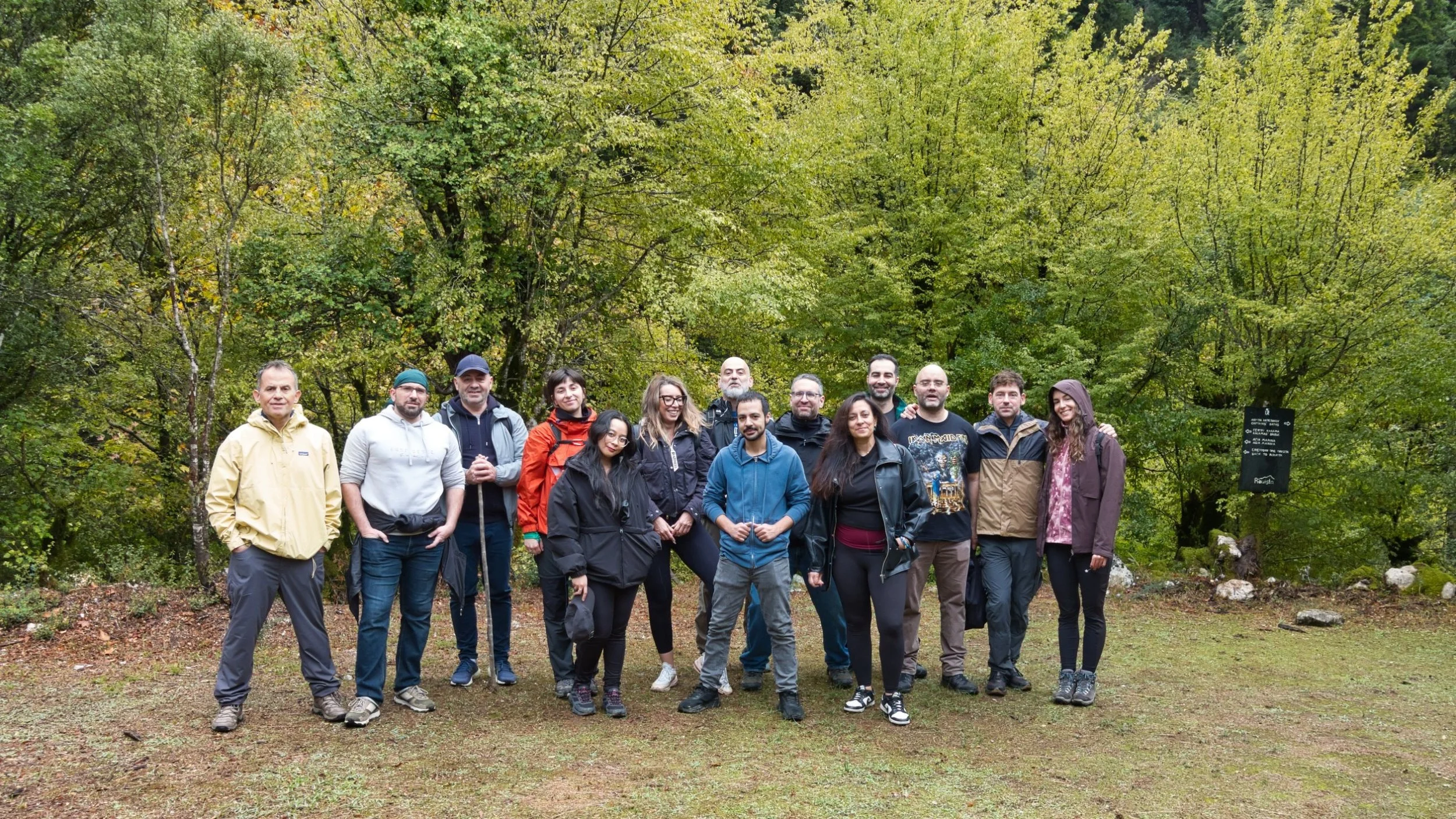
The Plex-Earth team hiking in the Tzoumerka mountains during LatLon 2026
The Plex-Earth story: from Athens to Vourgareli, and why we named it LatLon
Plex-Earth started in 2009 at a single desk at home in Athens. The first office came two years later, in 2011. Tzoumerka, though, has its own place in the company’s history. In the early years, our founder & CEO, Lambros Kaliakatsos, spent the summers in Vourgareli, and a lot of the thinking about what the product should become happened there.
In the summer of 2009, the village had no internet connection, so in order to read a single email from a customer, Lambros had to drive 60 km down to Arta and back. Our values remain the same to this day; we always want to show up for our clients.
It’s a story we still tell every new team member, because it shows how we want to treat the people who use our software.
Seventeen years later, the whole team went back to the same village (with internet connection this time).
The name of the retreat comes from our code. LatLon is one of the most important classes in the Plex-Earth codebase, the one that deals with latitude and longitude, and a large part of what the software does depends on it.
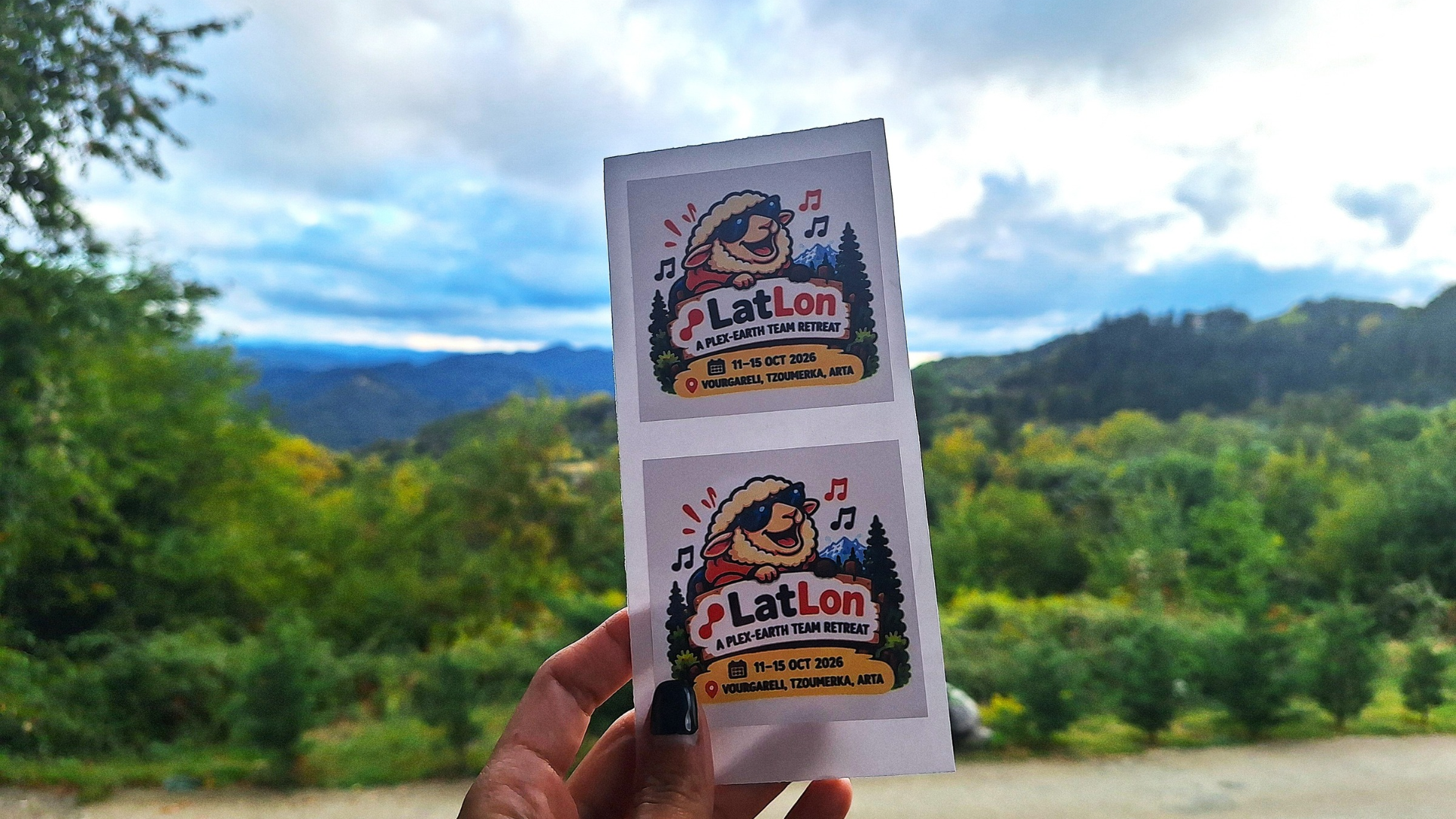
View over the Tzoumerka mountains from our hotel in Vourgareli
For Lambros, the name also works as a question: where exactly do we stand in the world, and where are we heading? Plex-Earth is changing. What we’re building now is more than a new version or a list of improvements. It’s a major shift, and a shift like that only works if everyone is focused and pulling in the same direction.
The retreat had four aims: time together as a team, presentations from every department so that everyone knows how each project is going and what we need from one another, brainstorming on how we can work and communicate better, and a first look at the new era of Plex-Earth. So what does the future of Plex-Earth look like?
The future of Plex-Earth, from CAD plug-in to product ecosystem
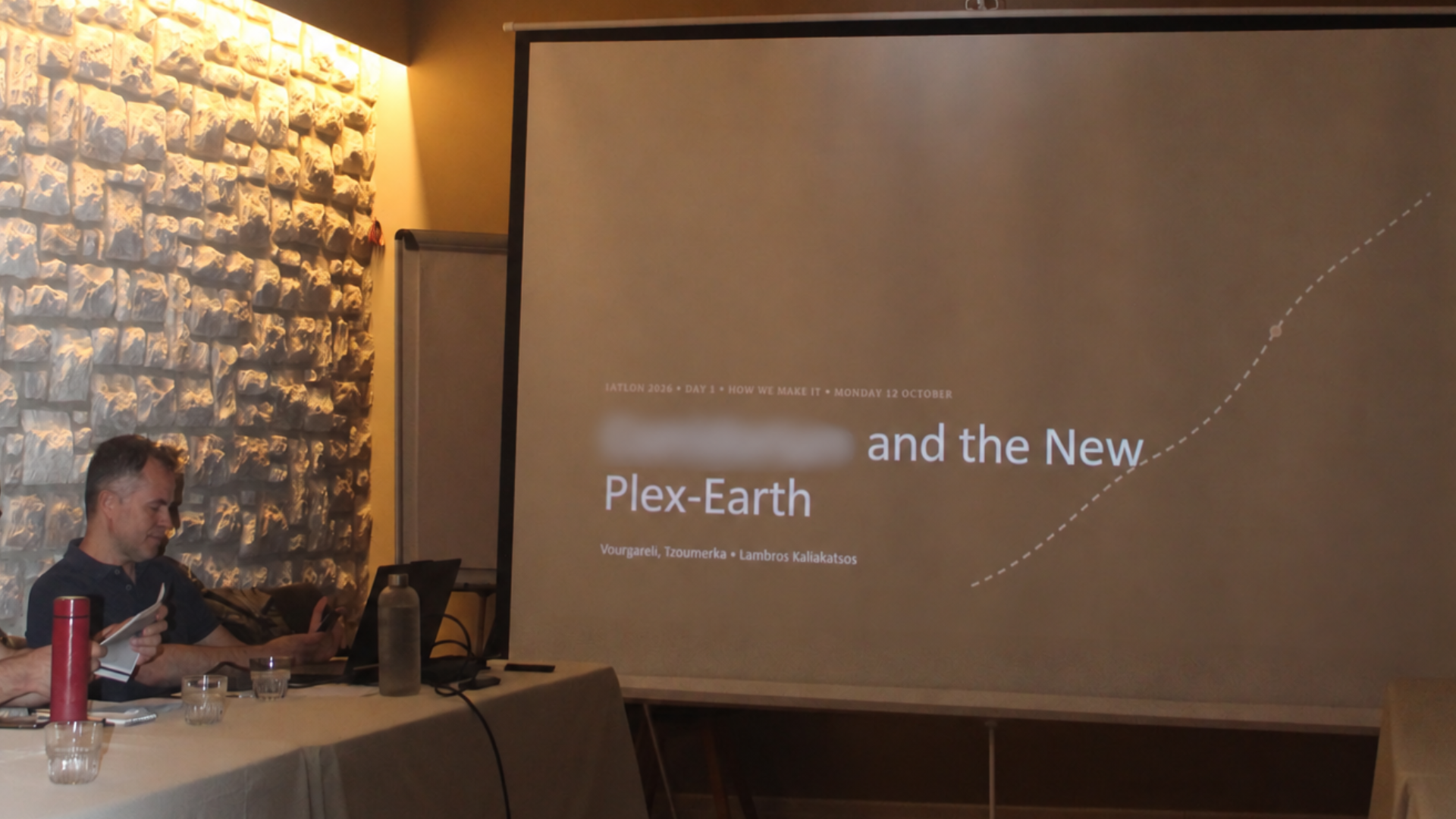
Plex-Earth CEO presenting the company’s new direction during the team retreat
When the Autodesk App Store opened, Plex-Earth was there from day one, as one of its first 50 apps. Now, as design and geospatial data enter a new era, we want to lead again, and that means bringing new ideas and not being afraid to think differently.
Lambros opened the discussions with an honest look at the market. Imagery alone is no longer enough. If Plex-Earth wants to stay useful to engineers, it has to compete on a different level.
We can’t share the details yet, but the direction is clear. Plex-Earth is growing from a single CAD plug-in into a family of products built on one shared imagery infrastructure. The classic Plex-Earth, with basemap imagery, terrain and GIS tools, will continue. Next to it, we are preparing a product dedicated to leading premium imagery providers, and new products designed for different types of projects.
A new direction like this raises one big question, and it came up in almost every conversation at LatLon: AI.
AI in CAD and civil engineering: how it will shape the future of Plex-Earth
Of course, AI will be part of the new Plex-Earth, but we want to be open about how we use it.
Right now, AI is everywhere, and it’s tempting to add it to every product, but we’d rather take our time and get it right. Our users design roads, pipelines, solar farms, and fiber networks that real people will depend on for decades. In that work, a confident wrong answer is worse than no answer at all, because mistakes made early in a design tend to travel all the way to the site.
So we’re holding AI to the same standard engineers hold their own work. It has to save real time on real tasks. It has to be clear about where its output comes from, so engineers can check it and defend it. That takes longer, but we think it’s worth it!
Whatever we’re building next, a few things don’t change: we’re working to make our software and services faster and more reliable, and we’re designing every step with our customers’ privacy and trust at the core.

The developers and AI team, warming up for the season ahead
How our teams work together, from support to marketing
Next, we focused on the team: the people, and how we decide and work together. Lambros shared a short history of how Plex-Earth grew without investors, when revenue paid for every next step. Even in those years, product, support and marketing were never separate. Everything we did told people who we are; we’ve always put trust before sales.
Today, those teams have grown, and each one presented its work: Marketing, Sales, Support, Customer Success and HR.
The new marketing team talked about its first year of dedicated work: creating content that is relevant to our audience and researching the market to understand our users better. Customer Success and Support talked about listening to customers and, just as important, closing the loop so feedback actually shapes what we build next. Newer team members brought fresh ideas for keeping every team in sync, and we took a hard look at processes that had quietly grown out of date.
HR closed the day with a conversation about the four pillars that hold us together: well-being, balance, personal growth and shared goals.

Plexy, our LatLon mascot, took the place of our CEO for the team selfie
Between the talks: team bonding, hiking and rafting in the Tzoumerka mountains
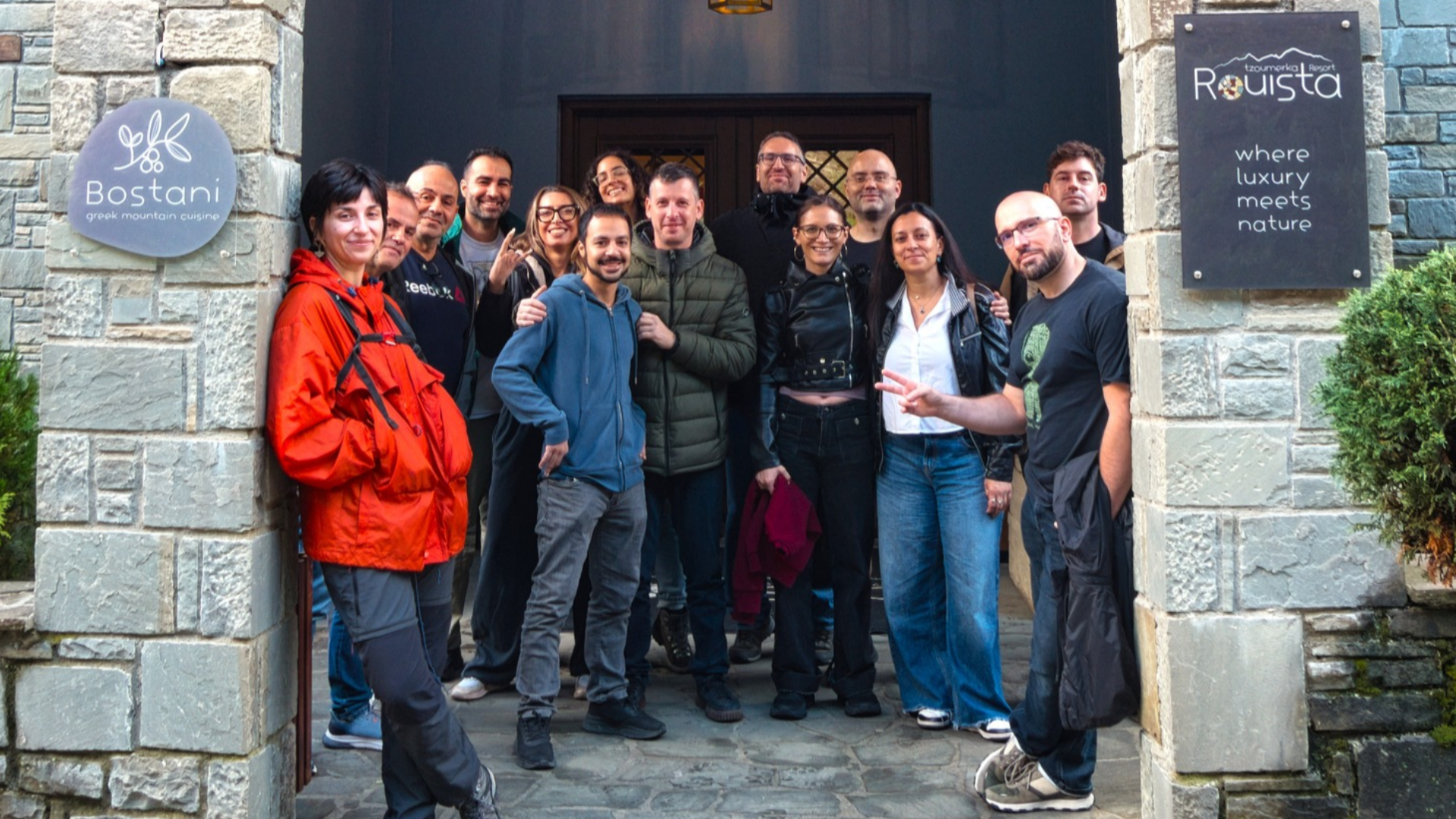
First moments of the retreat: the whole team at the hotel entrance, just after we arrived
The adventure started long before we reached the mountains. We travelled together in a minivan, and the five-hour drive from Athens went by surprisingly fast, mostly because we spent it playing “Trivia” (it turns out that a team used to explaining complex software is very good at describing words, and very loud about it).
When we arrived, Lambros took us on a short tour of the village, which holds a surprising amount of history. Vourgareli sits at about 900 metres on the slopes of the Tzoumerka mountains, and played an active role in the Greek Revolution of 1821 (we learned a lot of Greek history that day!).
We stayed at the Rouista Resort, with magnificent views over the mountains, traditional stone architecture and wonderful Greek cuisine. It was the perfect base for the retreat, a place to settle in, explore and recharge.
Between the presentations, we made plenty of time to get outside. We spent the morning hiking the trails around Vourgareli, and in the afternoon we went rafting on the Arachthos river.
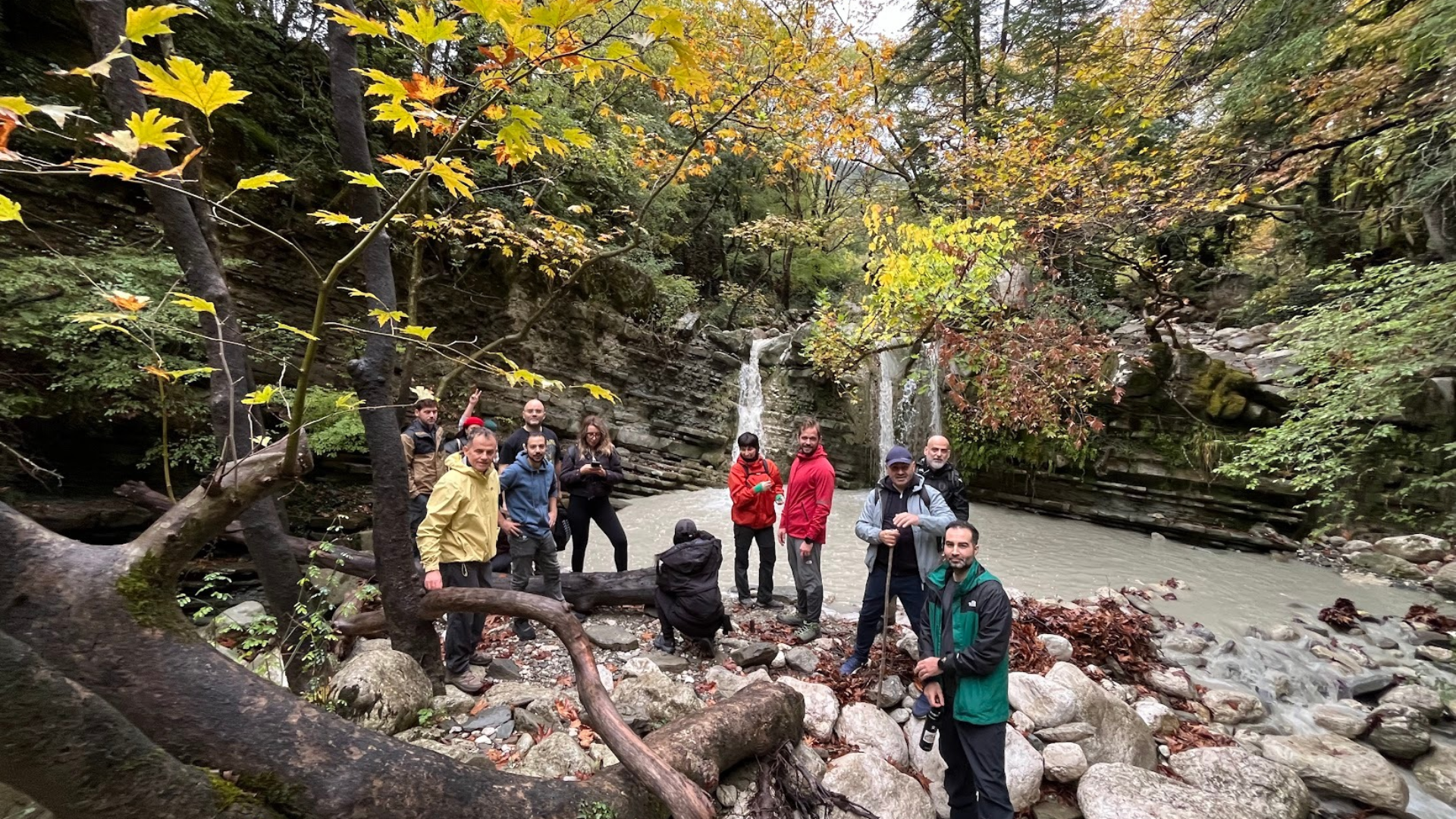
Exploring the Tzoumerka forest with Dimitris, our hiking guide from Rouista Resort (Fun fact: the team at Rouista reopened and now maintains these old, abandoned trails, which even many younger locals didn’t know existed.)
We hiked to the “Captain’s Baths”, under hoods and through an autumn forest of green and yellow leaves. It rained most of the way, but as the Scandinavians say, “There’s no bad weather, only bad clothing.” Along the way, we even met some real sheep, which felt like a personal appearance from our mascot.
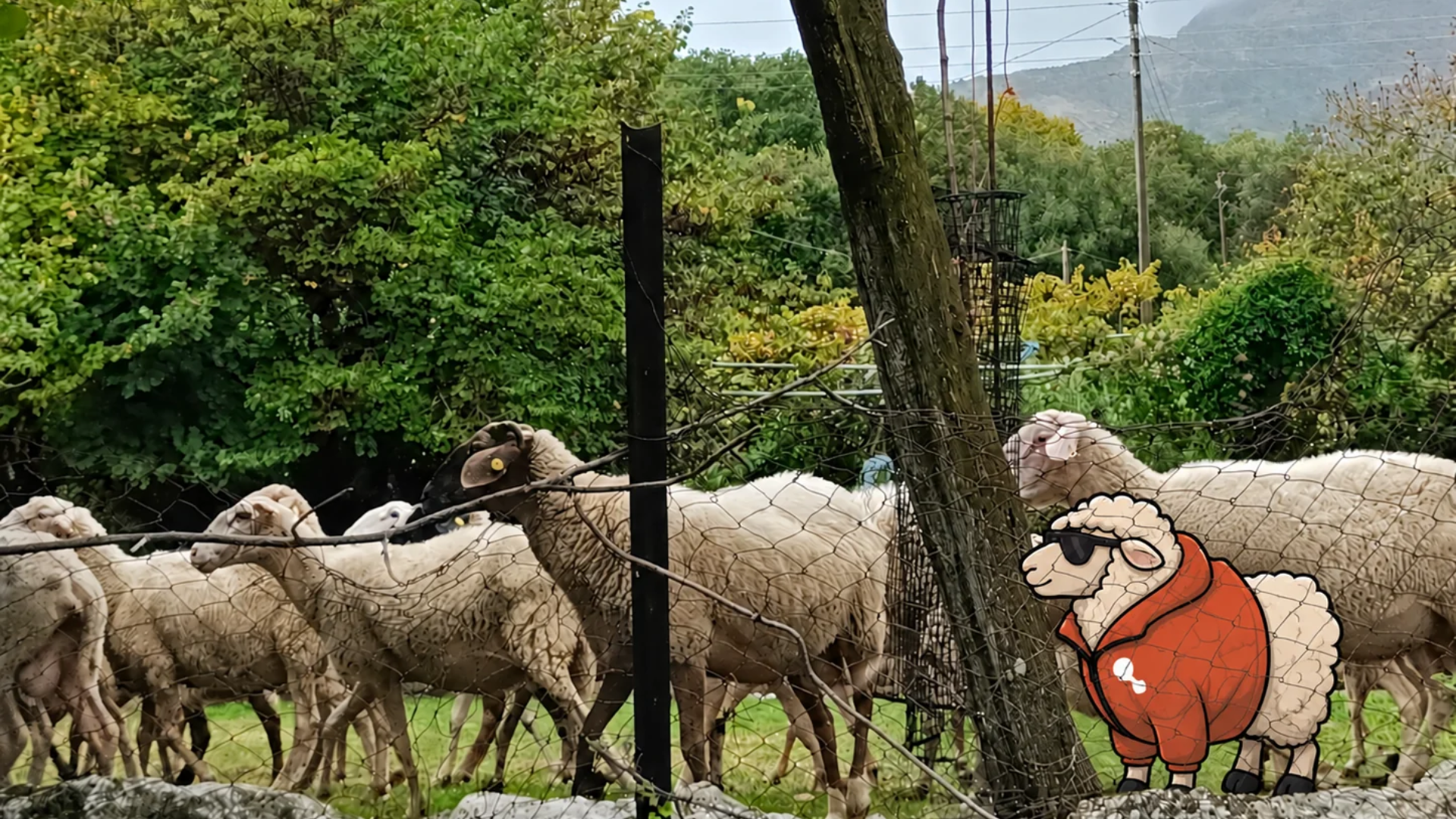
Plexy the mascot among her friends
The more adventurous among us put on wetsuits, helmets and life jackets, carried the rafts down the stony riverbank and pushed off onto the Arachthos. And of course they came back with plenty of brave stories to tell over dinner that night.
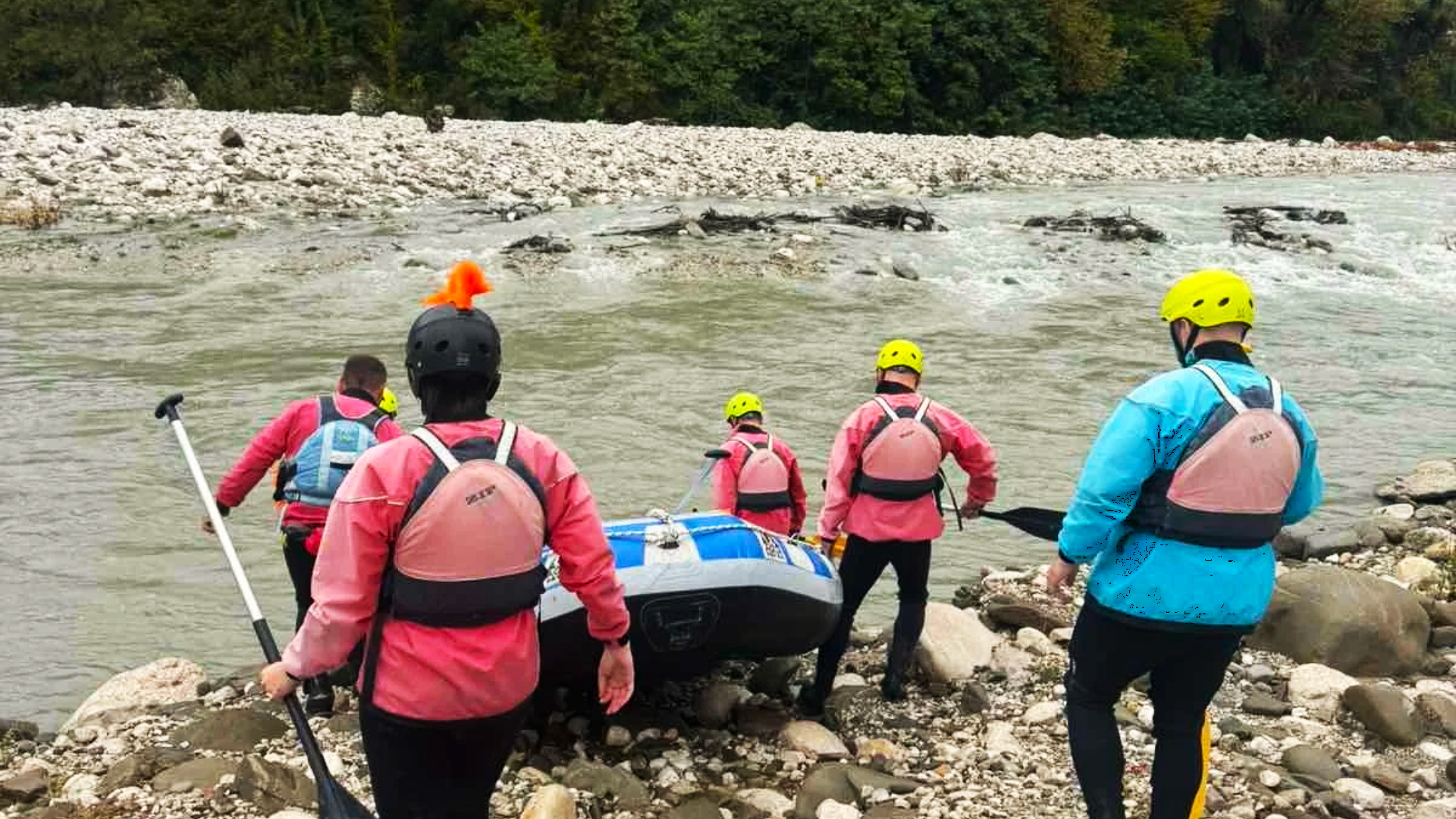
Plex-Earth team rafting on the Arachthos river in the Tzoumerka mountains
Of course, after a few hours on the Arachthos, we started wondering: where does all this water end up? We found that, further down the river, near Arta, it fills the lake behind the Pournari Dam.
For a team that spends its days looking at the world from above, we had to see it properly. We imported some Timeline images of the lake from Vantor & Airbus in Plex-Earth and compared the same spot in summer and in autumn. We noticed that the water level there is noticeably lower this autumn than it was in the summer, and remembered that how a site changes over time is exactly why engineers use historical imagery before they start a design.
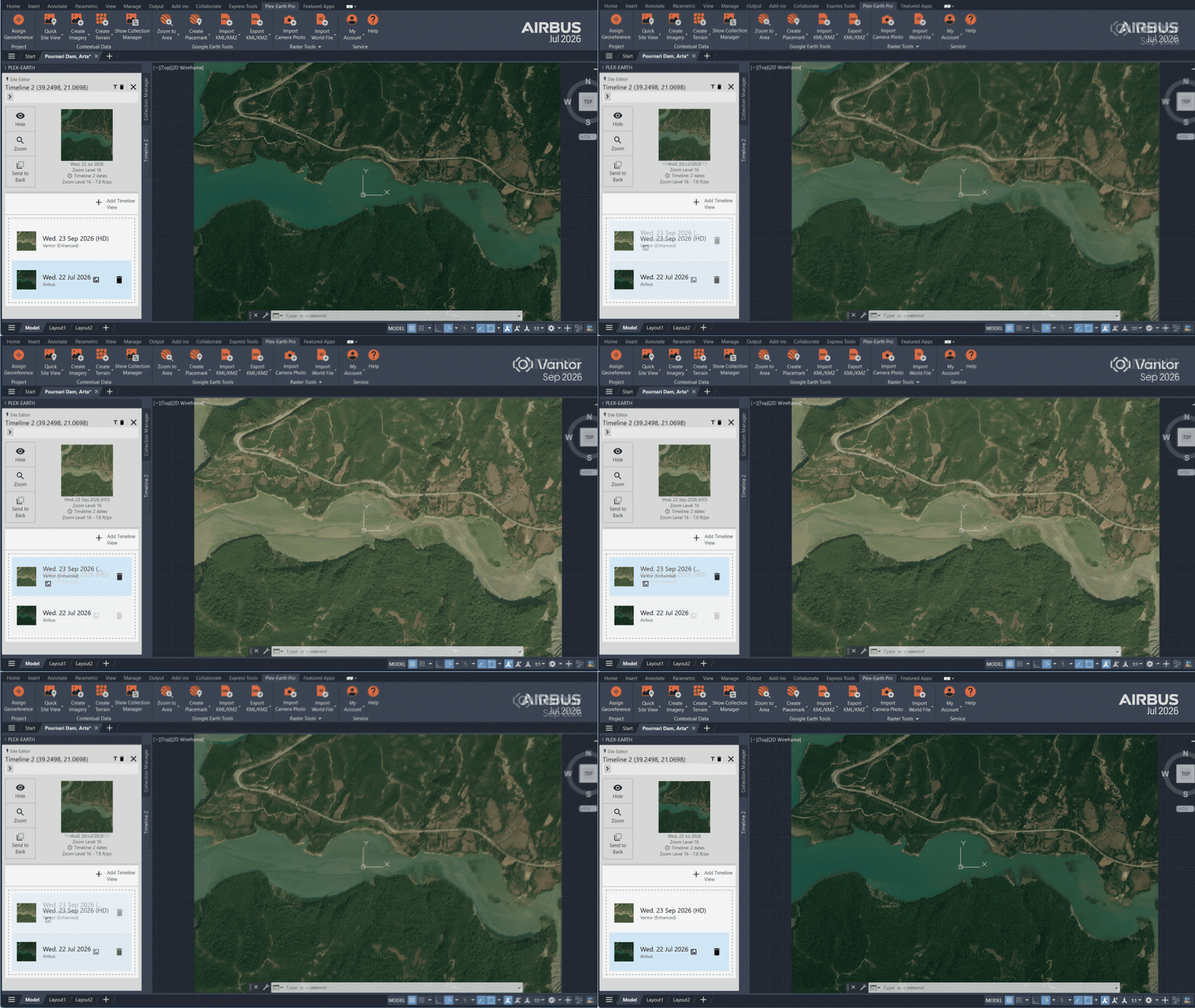
Before and after: Pournari lake in July and September 2026, with Vantor and Airbus imagery in Plex-Earth Timeline
The evenings were just as important as the talks. We shared long dinners of local mountain cuisine, made with locally sourced food (everything tastes better after a day in the freshest mountain air, right?). We played board games that got more competitive than anyone will admit, and talked over drinks well into the night.
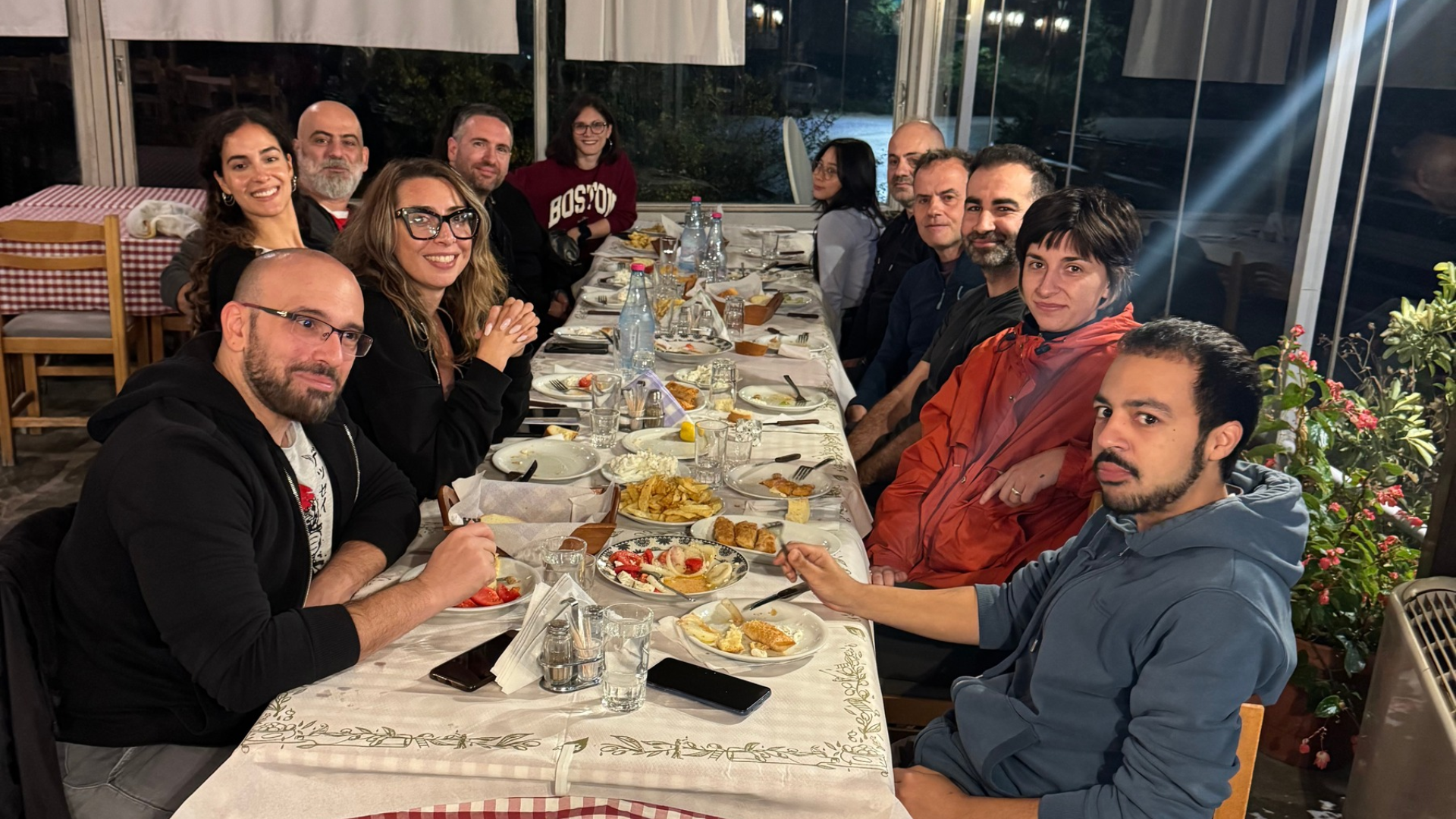
Tasting delicious local Greek food
Planning the next retreat
We came back from the mountains with one thing everyone agreed on: we want to do this again. Lambros already plans to make LatLon a yearly retreat, in a different place each year.
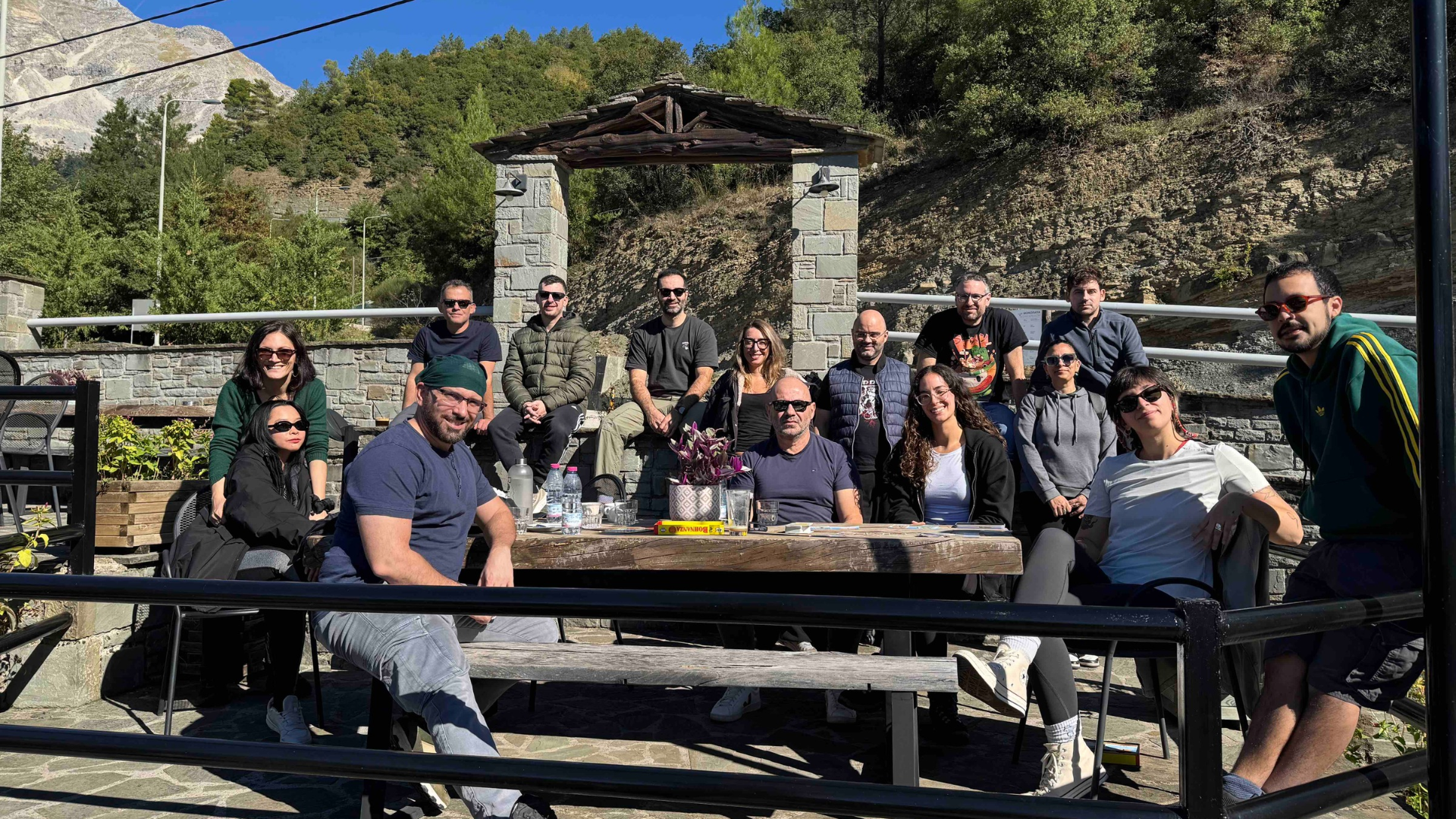
Last photo in the sun before heading back to Athens
LatLon had one simple goal: that everyone would go home knowing what their colleagues do and why it matters. In the mountains, we remembered who we were, took an honest look at who we are, and agreed on who we want to be. And, true to the name, we left knowing exactly where we stand and where we’re heading.
We know we’ve been quiet for a while, but big things take time, and we didn’t want to rush them. The work is well underway, and over the coming months we’ll start sharing more.
We can’t wait to show you what we’ve been building!
Follow us so you’re the first to hear our latest news, and thanks for joining us on this journey.
